


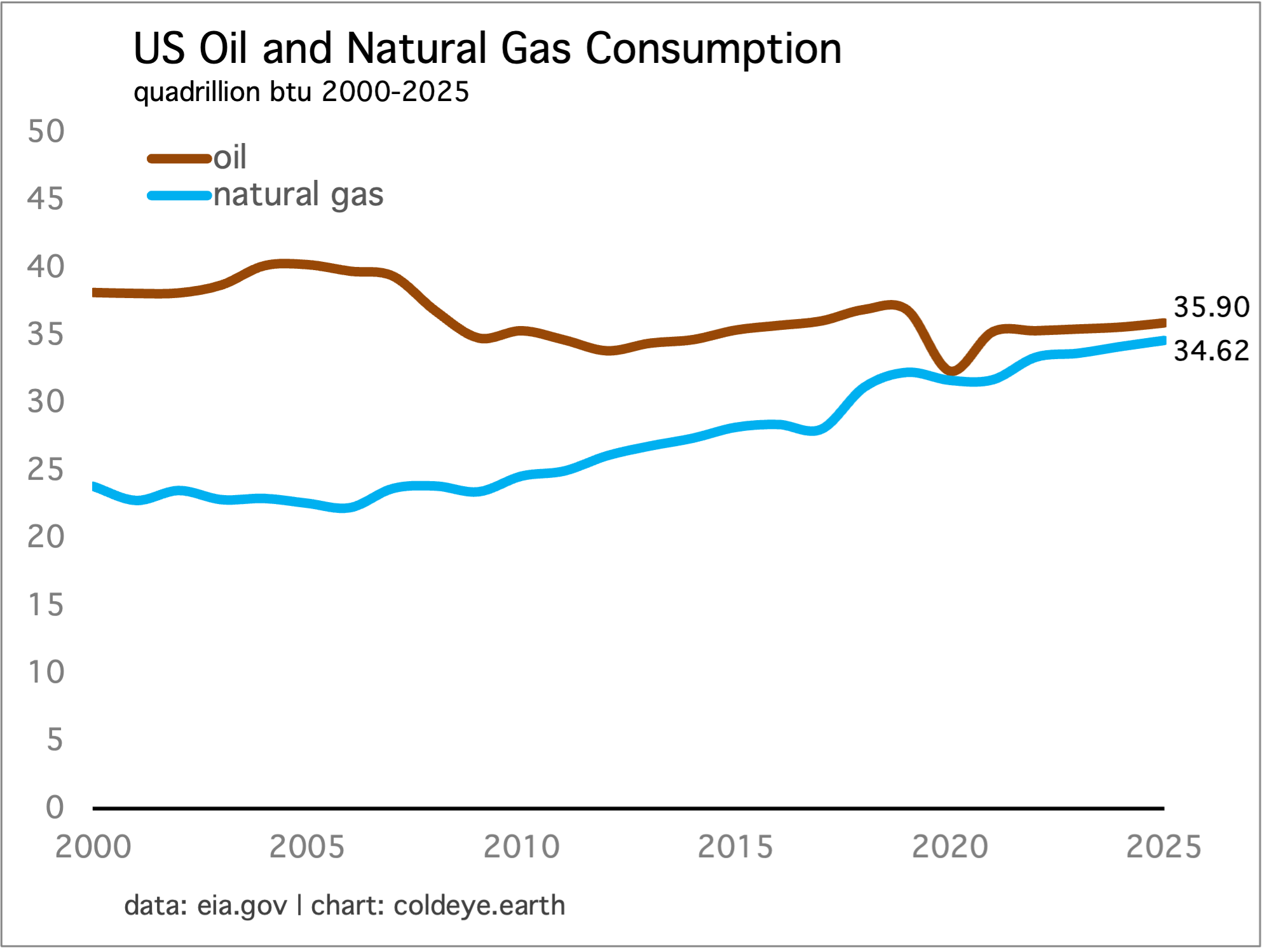
The U.S. continues to build an expanding dependency on natural gas, and that trend looks ready to extend further on the back of the data center buildout. Mostly due to the ongoing coal crash that began more than a decade ago, U.S. natural gas consumption has relentlessly moved higher. (Indeed, consumption growth has evolved to such a high level that, on an energy content basis, natural gas is on the verge of becoming the primary energy source of the country, displacing oil from the top position.) Many observers think this is great news. Gas has far lower emissions than coal, they argue, and that is true. But there’s a cost to this evolution in the U.S. energy system: not just a new dependency on natural gas, but a strengthened path dependency in which young, economically viable natural gas power capacity embeds itself into the landscape, with a long lifespan that will not be dislodged.
Now comes the data center wave, which will boost U.S. natural gas consumption to ever higher levels, in part due to bottlenecks in the U.S. grid and transmission system. Those bottlenecks—which prevent data center developers from sourcing electricity through a regular connection to the existing grid—are driving the buildout of behind-the-meter (BTM) gas-fired power plants. Located in situ, these “bespoke” power plants could drive power sector emissions up another 20%, according to a recent report from Bloomberg:
Data center developers are turning to bespoke natural-gas power plants, a development that promises to dramatically increase carbon emissions and make it harder for US technology companies to meet their lofty climate goals.
Ninety-nine proposed plants tracked by BloombergNEF would emit about 318 million metric tons of carbon dioxide annually if run at industry-standard rates, according to a Bloomberg News analysis. The entire US electric power industry emitted about 1,485 million metric tons of carbon last year, according to Energy Information Administration data, meaning one slice of data center infrastructure has the potential to lift US power sector emissions by 20%, and as much as a third should the new plants run flat out.
We should in addition consider all the wind, solar, and storage (WSS) that will not get built, because these technologies are also bottlenecked across the U.S. While it’s true that WSS has had to share growth with natural gas regardless over the past decade, here we have an example of how the regulatory environment trips up just about every energy source, especially renewables. Equally, we have to also remember how cheap natural gas remains, on an energy content basis—which is also quite influential in the decision-making around these developments. Given the price history of U.S. natural gas over the past 25 years, the current level of $2.50–$3.00 per million Btu is not just cheap but crazy cheap, and doesn’t even reflect any of the inflation of the past several decades. As Cold Eye Earth has pointed out previously, today’s natural gas prices are so affordable, it’s like walking into a grocery store today and paying 2006 prices for milk or butter.
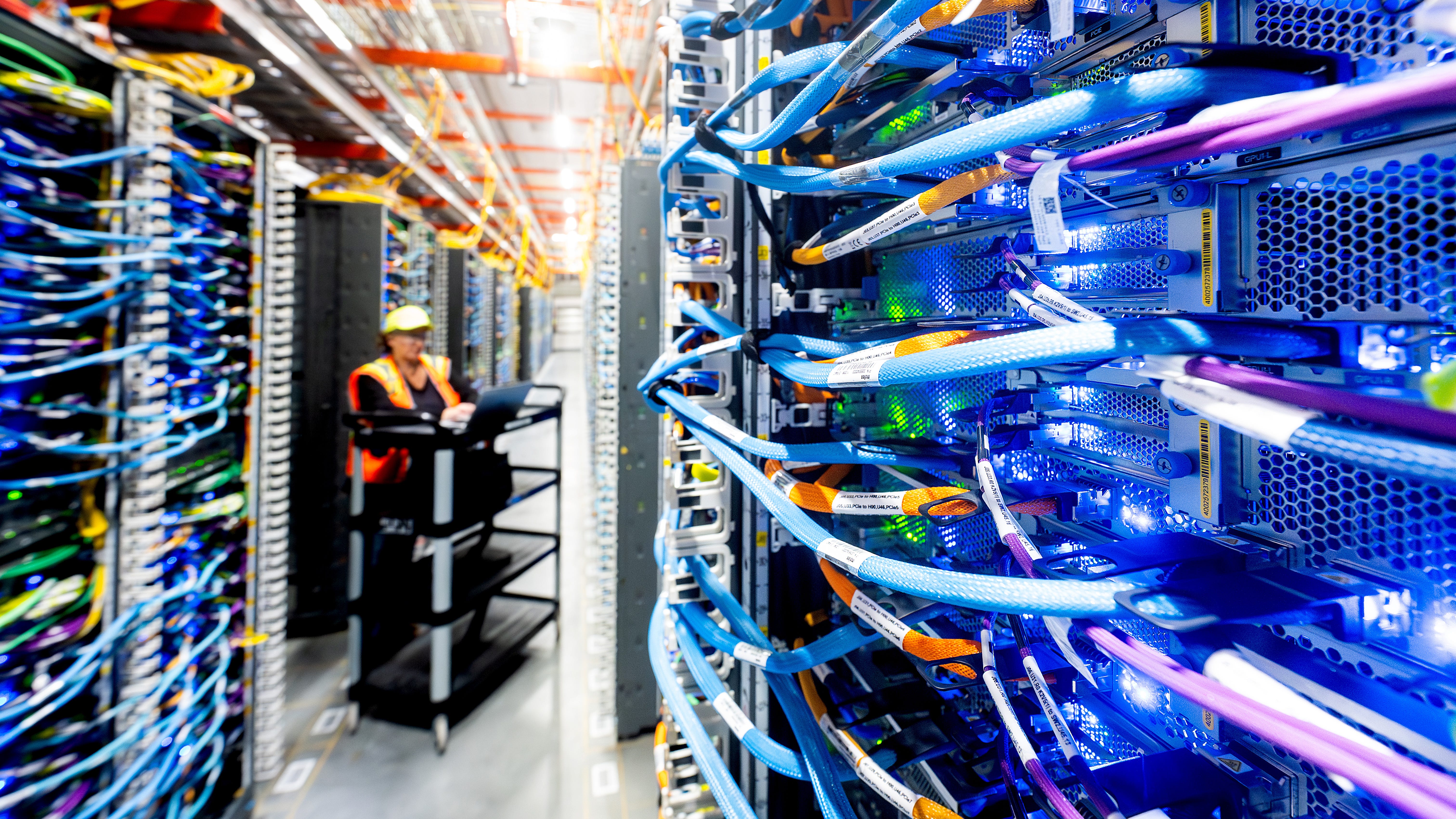
U.S. public support for data centers has collapsed, and now politicians from all sides are capitulating to the sentiment. For a little while, Republicans held the line on data center growth. But now, elected GOP leaders from Ohio to Texas are falling into line. In Texas, where you can build just about everything on a rapid basis—wind farms, gas plants, solar farms, battery storage—the governor was reported as saying that data center companies had “dug their own grave,” as he enacted a moratorium on further interconnections until the state can audit applicants’ impacts on water and the local grid. This comes at the same time that a National Republican Senatorial Committee memo warned AI companies that their public image was so awful that this threatened a GOP Senate seat in Ohio.