


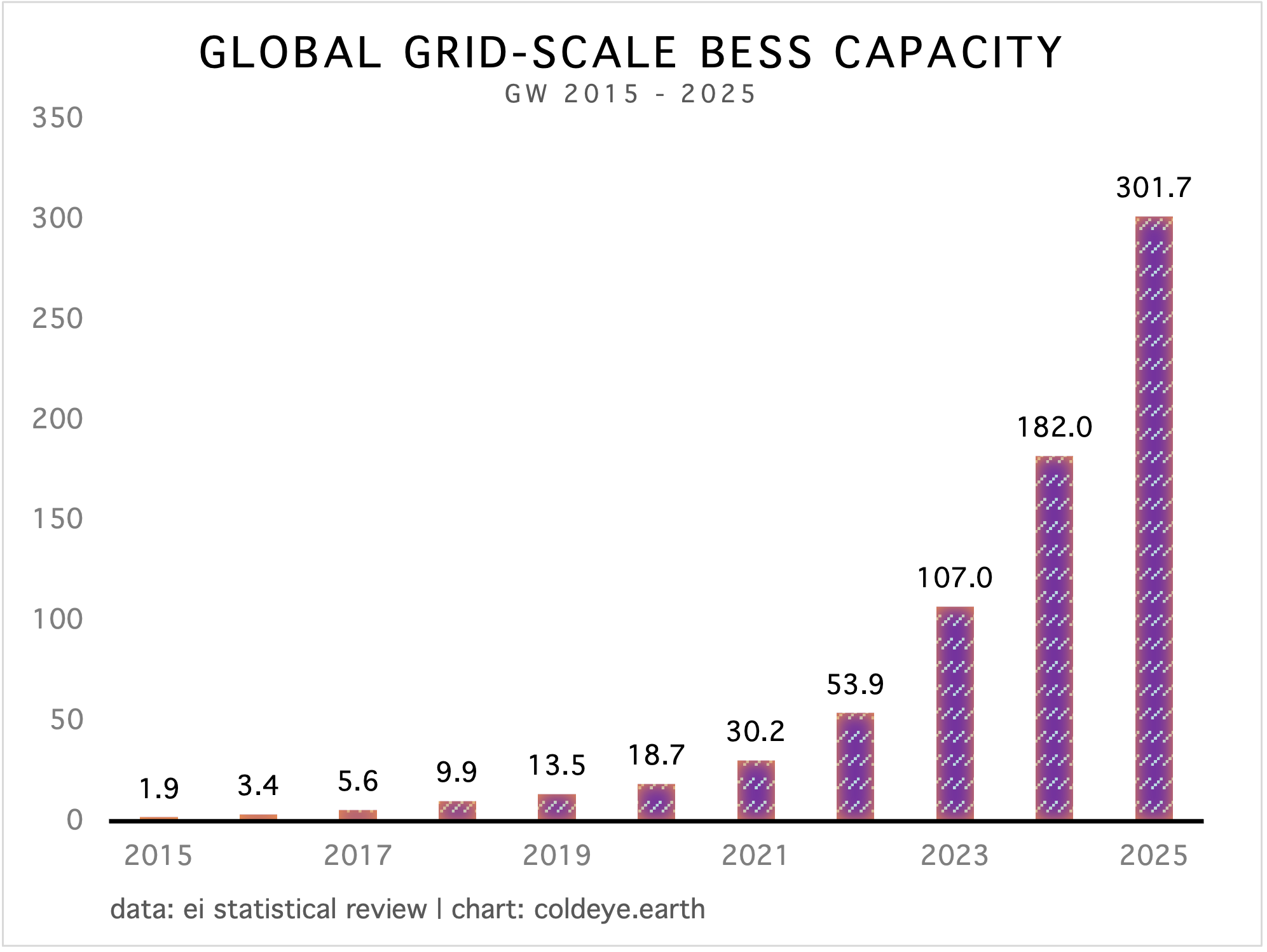
If the world finds it too challenging to overbuild wind and solar, perhaps we could overbuild storage instead. One way to more aggressively dislocate incumbent fossil fuel generation would be to overbuild clean generation, but convincing a free market to undertake such a push is not viable. Indeed, this is a reflection of wind and solar’s current position on the profitability borderline: They are robust and competitive in the market for marginal capacity growth, yet they are mostly helpless against economically viable existing generation. Storage may be another matter, and here’s why: There are few, if any grids, that can’t make good use of storage. Doesn’t matter if your grid is all loaded up with natural gas and coal either. Storage is itself short-term generation: It fills gaps, and is therefore a moneymaker. Finding a way to compensate overbuilders of wind and solar generation would not be easy. But overbuilders of storage in most domains would find they are viable almost immediately. Already, the storage market is growing like crazy: The U.S. market has grown by an average of 70% the past three years, and the global market grew 66% last year.
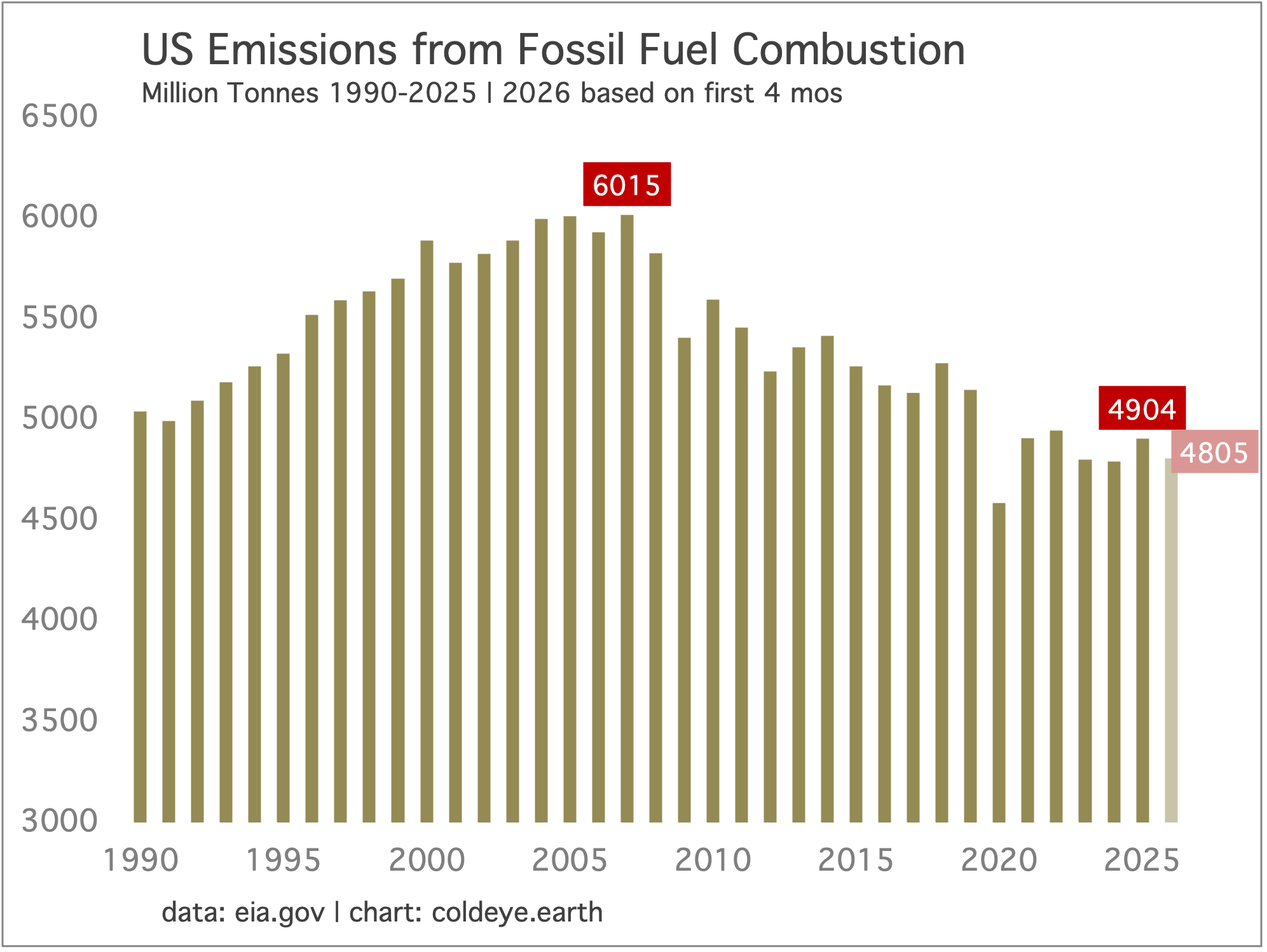
In contrast to the 15-year period from 2005 to 2020, progress in U.S. emissions reduction has come to a halt. Since the pandemic, U.S. emissions have oscillated between 4,800 and 4,900 million metric tons. Last year and this year are typical: Emissions grew by 2% last year, and this year they are on track to fall 2%. There really should be no surprise here, despite a number of U.S. think tanks who’ve mistakenly forecasted that the country’s emissions were on the verge of sustained decline. Indeed, as most analysts understood some years ago, the great coal consumption crash of 2010–2020, combined with a laudable halt in motor gasoline growth since 2005, meant that emissions fell steadily for over a decade. Some will blame policy mistakes, but frankly this is a classic tale of low-hanging fruit being harvested first. Better building standards, higher mileage efficiency, and introduction of EV, wind, and solar have all contributed to dislodge oil, natural gas, old coal, and older cars. Now the country faces a tougher challenge: With combined wind and solar on course to provide 20% of U.S. power generation, from what sector will the next round of emissions cuts be derived?
Wind and solar continue to dominate all marginal growth in U.S. power demand. And yes, through the first five months of this year, wind and solar are on target to hit exactly 20% of total U.S. generation. Fingers crossed. Notice how, in both 2025 and now 2026, all generation ex–wind and solar is hovering around 3,670 TWh. It’s pretty safe to say, therefore, that fossil fuel growth in U.S. power generation has come to a halt.
Combined wind and solar, meanwhile, are on track to reach over 950 TWh this year. Here’s an easy call: They will surely go over 1,000 TWh next year.