


The IEA wrote a brief obituary for the Iran war’s oil crisis, which turned out to be not much of a crisis after all. At most, the world suffered roughly eight weeks of elevated oil prices around $100 a barrel in March and April before oil began its decline. Moreover, if $100 oil for a couple of months qualifies as “the greatest energy crisis of our lifetimes,” then the world is in exceedingly good shape when it comes to energy disruption risk to the global economy. $100 oil is cheap, and not even remotely comparable to $100 oil 20 years ago, as inflation and wages have moved strongly ahead over those two decades. If your intuitions are inclined to fight this truth, go right ahead, but you will come up empty-handed. As we go to press, oil has of course responded to the Iran war’s conclusion, as the price has now drifted down below $70 a barrel. That price is actually equivalent to about $42 a barrel in 2006—but no one was paying $42 for oil in 2006. No, they were paying much more that year: The average nominal price in 2006 was $55 a barrel, which in inflation-adjusted terms is about $91 a barrel, roughly 30% higher than today. (And as we know, oil prices went far higher, for longer, during that period.) Cold Eye Earth will say it again: fossil fuel prices have not kept up with inflation, and have failed as an inflation hedge. You’d be better off having invested in other liquids, like wine or Scotch whisky.
But back to the “energy crisis” story. The IEA understandably focused on two structural factors that kept the Strait of Hormuz blockage from evolving into a global economic crisis: China’s enormous stockpiles of stored oil and the slow rate of global demand growth. (Cold Eye Earth discussed these and other factors in the 15 June issue, “Stocks and Flows.”) Here is the IEA in its summary:
The global oil market went into this crisis with significant buffers. In February, before the outbreak of hostilities, the IEA’s market balances indicated a surplus of 3.7 million barrels a day for 2026 as a whole.
Global oil supply had been running ahead of demand for 12 months, with the amount of oil in storage reaching 8.2 billion barrels. China, notably, had for many months been hoovering up huge amounts of oil imports and putting them in storage. This, combined with demand reductions both by refiners and end-users enabled China to slash crude oil imports by 40%—or 4.6 million barrels per day—between February and May, helping significantly to ease wider pressures in the global market.
When the flow of oil tankers through the Strait of Hormuz plummeted in early March, the massive global surplus that had built up over the past year gave oil markets a valuable cushion from immediate impacts.
A helpful rule of thumb to keep in mind in commodity markets is that when the rate of demand growth can be met easily by the rate of supply growth, the futures market enters a relaxed state. That’s why, outside of crises—whether small or large—the global oil market has been unconcerned about supply for many years now. No, it’s never “easy” to bring on the marginal barrel of supply, but when the rate of demand growth consistently struggles to sustain itself above 1.00% per year, it gets a lot easier.
Moreover, we should probably deflate global demand rates even further over recent years, because the crisis revealed just how much stockpiling China had been undertaking. The result may seem obvious, but it’s worth stating it clearly: Oil has been so affordable for so long that China correctly concluded that importing more oil than it needed and stockpiling it delivered a good return on investment. When the Iran war began, therefore, China’s long-term thinking paid off, essentially offering relief to the entire world for the simple reason that those stockpiles served China’s demand. China took responsibility for itself and thus, by implication, delivered a benefit to the world. The contrast between China’s adult-level decision-making and the impulsive, unplanned, authoritarian decision by the U.S. to make sudden war on Iran is disturbing. The results of that great divide could not be more clear.
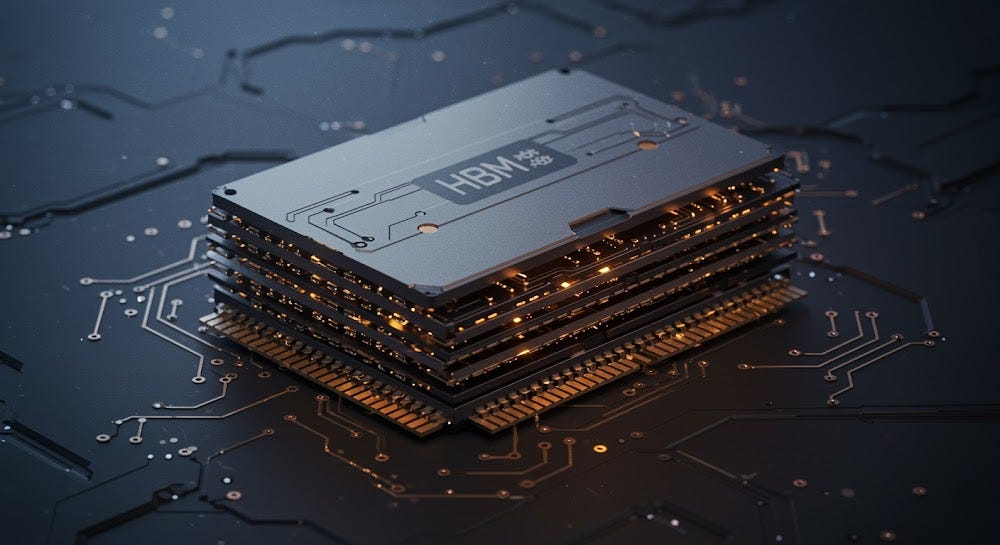
One sector where the rate of demand has gone into the stratosphere, while marginal supply is essentially unable to respond, is the newly hot AI trade in semiconductor memory. Commodity analysts are typically alert to the risk that cyclical rebounds in demand can often arrive after periods of underinvestment, which invariably supercharge prices as suppliers are caught off guard. We have seen this many times in copper, uranium, and other metals, but this time analysts completely missed the fact that memory—historically a kind of simple if not dumb component in electronic component manufacturing—would become critical to the functionality and growth of AI. It’s been called one of Wall Street’s biggest whiffs that few saw this coming, but memory, it turns out, may be just as critical to AI growth as the far more complex and higher-priced chips made by companies like Nvidia.
One way to think about this is that the AI buildout has just received a lesson in Liebig’s law of the minimum (from Wikipedia):
Liebig’s law of the minimum, often simply called Liebig’s law or the law of the minimum, is a principle developed in agricultural science by Carl Sprengel (1840) and later popularized by Justus von Liebig. It states that growth is dictated not by total resources available, but by the scarcest resource (limiting factor). The law has also been applied to biological populations and ecosystem models for factors such as sunlight or mineral nutrients.
In other words, you can gather all the fancy-pants components you need to mount a project, but if you are short the normally simple stuff like soil or sand—or in this case memory chips—you are going to be highly constrained. Here, memory is placing a kind of tax on AI growth in the same way oil, when it was more scarce and demand rates were higher, often placed a tax on economic growth. (Indeed, there is a view that when oil prices rise in response to strong global growth, that oil is itself doing the work of central bankers by tightening conditions around global growth.)
Unsurprisingly, semiconductor memory has historically been thought of as a routine commodity product, oscillating between glut and scarcity. Oh, how the tables have turned! In the aftermath of Micron’s earnings report last week, many gasped that much of the capex being spent by the large hyperscaler companies (Google, Meta, Microsoft, Amazon) would now be going to the memory makers. What an outrage! But what did they expect? In the first of the recent two-part series, “Markets I—Won’t Get Fooled Again,” Cold Eye Earth suggested that many aspects of this AI hypergrowth period are reminiscent of a commodity bull market, often born on the ashes of the previous bear market:
Despite the tech-focused character of the AI mania, elements of this current boom have more in common with a commodity bull market. You will recall that the dot-com boom drove sales of personal computers, the laying of fiber-optic cable, and the early appearance of mobile phones. But mostly, dot-com was a connectivity explosion that used existing networks (telephone lines) and distributed itself rather quickly and easily using software. (The AOL disk in the mail comes to mind). The AI boom, however, has unleashed a powerful wave of demand for power sector equipment: turbines, transmission lines, and associated grid infrastructure.
One is also reminded of a rather prescient call made by T.S. Lombard back in 2021, asserting that semiconductors were the new oil and that the South China Sea (surrounding Taiwan) could potentially become the new commodity chokepoint for the world. Here we start to make contact with the market analogy that Cold Eye Earth has in mind, that the AI boom shares qualities with the unexpected and thus extremely powerful peak oil bull market in oil that ran from 2003 into 2008.
This constraint in available manufacturing capacity for memory is of course the second bottleneck to arise from the AI infrastructure buildout, the first one being the limited onramps to power supply, as many proposed data centers are not being built because they can’t plug in to the electrical grid. (Also true for myriad wind and solar projects.) For those who are against data centers and want to see them curbed, it may end up being internal supply constraints, not community protests, that sustainably curb their growth. The call, as they say, is coming from inside the house.
Lingering question: Having embarked on the pursuit of artificial intelligence, why was it not more broadly understood to the tech sector that to mimic intelligence you would also need to mimic memory?
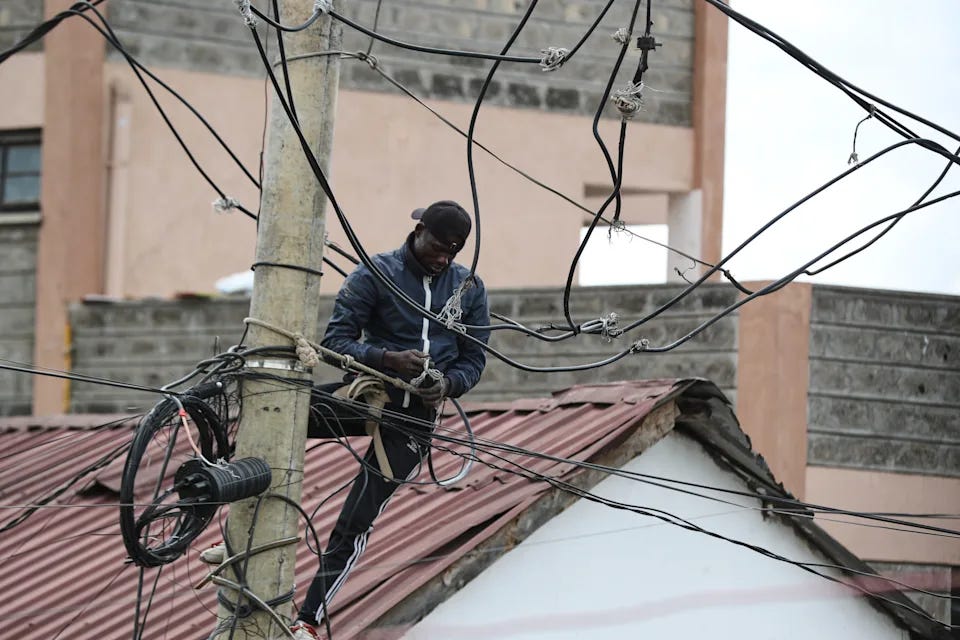
The world has made enormous progress over the past 20 years in connecting populations to the electricity system. But there is much more to be done. As recently as 2010, the largest collection of people without energy access happened to reside in India. But now, in the wake of India’s heroic effort to extend electricity to rural regions, the focus has turned to sub-Saharan Africa, where, according to the IEA, 550 million people are still waiting to plug in to grids—grids that, in many cases, are yet to be constructed. The IEA’s just-released Energy Progress Report estimates that the total global number of people lacking electricity currently stands at 655 million.